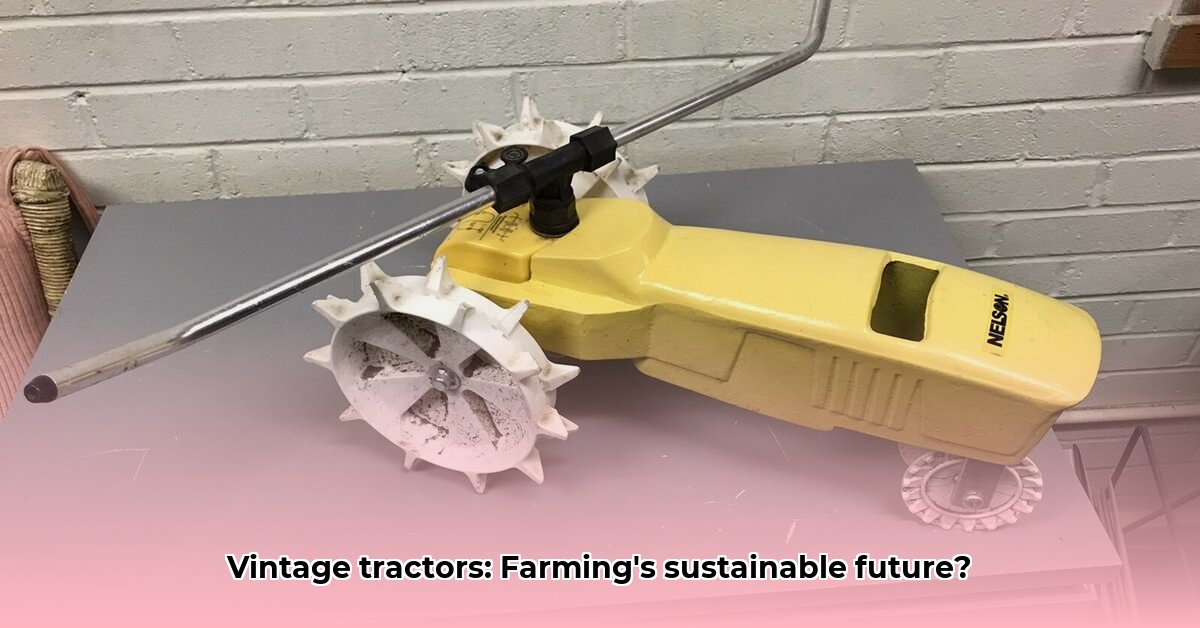
Tractor Sprinkler Vintage: A Blast from the Past, Watering the Future of Sustainable Farming
Ever picture sun-drenched fields, a vintage tractor chugging along, its sprinkler a graceful dance of water? This nostalgic image represents more than just agricultural history; it hints at a surprising resurgence. Vintage tractor sprinklers, once the backbone of irrigation, are gaining traction not as mere relics, but as potential players in sustainable agriculture. For more images and details, check out this site: vintage sprinkler details. This article explores their potential, examining their history, market viability, sustainability aspects, and future prospects. We’ll delve into both the promise and the challenges these retro irrigation systems present, concluding with actionable insights for various stakeholders.
A Nostalgic Look at Old-School Irrigation
These weren't merely sprinklers; they were ingenious mechanical marvels, efficiently watering crops with relatively simple technology. Their rhythmic whir defined countless harvests. But their decline and subsequent resurgence beg the question: why this comeback?
The Unexpected Market for Vintage Irrigation Equipment
Quantifying the market for vintage tractor sprinklers proves challenging. While precise data is scarce, online marketplaces like eBay reveal consistent sales, signaling a growing niche market. This isn't a mass phenomenon, but a definite, if quiet, demand exists among collectors and environmentally-conscious farmers. The lack of comprehensive data, however, limits our understanding of its true size and potential. Further research is crucial to fully grasp the market dynamics.
Vintage Sprinklers and Sustainable Farming: A Closer Look
The appeal of these retro irrigation systems lies largely in their potential for sustainable farming practices. Many believe they offer water efficiency advantages and reduced reliance on electricity—a key benefit in the pursuit of energy conservation. However, a balanced perspective is crucial.
Potential Advantages:
- Water-wise Potential: Depending on their design and maintenance, these sprinklers may use water more conservatively than some modern systems. Further testing is needed to confirm this.
- Energy Saver: Often mechanical, they frequently require less or no electricity, minimizing reliance on fossil fuels.
- Preserving Agricultural Heritage: Their use connects us to agricultural history and maintains a sustainable approach to preserving farming traditions.
Potential Disadvantages:
- Maintenance Challenges: Age brings maintenance hurdles. Finding replacement parts can be difficult and costly.
- Efficiency Concerns: They may not match the efficiency of modern, high-tech irrigation systems. Comparative studies are needed.
- Repair Costs: Repairs on these older models are potentially more expensive than maintaining modern options.
The narrative isn't simply "vintage is better." A comprehensive cost-benefit analysis, considering water usage, long-term maintenance, and repair costs, is needed for a complete picture.
What Does the Future Hold for Vintage Tractor Sprinklers?
Predicting the future of this niche market is speculative. While current evidence suggests promise, it's not definitive. Will vintage sprinklers become a significant part of sustainable farming? It's a possibility, contingent on several factors:
- Further Research: Comprehensive research is essential to fully understand their water efficiency and long-term cost-effectiveness. Life cycle cost analyses are paramount.
- Community Support: A supportive network for restoration, repair, and parts sourcing would be beneficial to widespread adoption.
- Increased Awareness: Educating farmers about the potential benefits of these systems is critical for their successful integration into modern farming practices.
The need for future research, particularly comparative life cycle cost analyses and water usage studies, cannot be overstated.
What Different Players Can Do
Various stakeholders can contribute to a better understanding and potential implementation of vintage tractor sprinklers:
| Stakeholder Group | Immediate Actions | Longer-Term Goals |
|---|---|---|
| Collectors/Enthusiasts | Document findings; share information online. | Build community resources for restoration and repair. |
| Sustainable Farmers | Investigate water efficiency; factor in repair costs. | Conduct comparative field trials; share results. |
| Agricultural Historians | Preserve historical documentation and photos. | Create museum exhibits and educational resources. |
| eBay Sellers | Offer precise descriptions and high-quality photos. | Promote eco-conscious buyers; focus on sustainability. |
How to Assess Water Efficiency of Vintage Tractor Sprinklers for Sustainable Farming
Assessing the water efficiency of vintage tractor sprinklers requires a rigorous approach. It combines practical testing with an understanding of historical context and inherent limitations.
Key Considerations:
- Nozzle Condition: Worn or damaged nozzles lead to uneven water distribution and waste. Careful inspection and replacement are vital.
- Sprinkler Pattern: Observe the evenness and distance of water distribution. Inconsistencies indicate inefficiency.
- System Pressure: Correct pressure is crucial; too high wastes water, too low provides inadequate coverage.
- Water Flow Rate: Measure gallons per minute (using a bucket and stopwatch), comparing it to (if available) manufacturer specifications.
- Comparative Analysis: Direct comparison with modern systems is essential to gauge the vintage sprinkler's efficiency.
Weighing the Pros and Cons:
| Advantage | Disadvantage |
|---|---|
| Potential for lower energy use | Often less precise water distribution |
| Reduced reliance on complex electronics | Requires significant maintenance and repair |
| Unique aesthetic appeal | Parts availability may be limited or expensive |
| Simple mechanical design | Lower overall efficiency compared to modern systems |
The story of vintage tractor sprinklers is ongoing. Their niche role in sustainable agriculture warrants further investigation. This blend of history and modern environmental concerns offers a potential pathway toward responsible farming practices. The journey to understanding their true impact is just beginning.